Reviewed by Dr. Marai Vales
|
Reading time: four minutes
Drooling, chewing on toys, and changes in your baby’s mood are all signals that a first tooth is getting ready to appear. Knowing what to expect during this stage can help you recognize normal changes and identify symptoms that may have another cause.
Table of Contents
When Do Babies Start Teething?
Most babies get their first tooth at around six months of age, although there is a wide range of normal. Some babies develop a tooth earlier, while others may not have one appear until closer to their first birthday.
Parents may notice changes before they can actually see a tooth. As a tooth moves toward the surface and begins to break through the gum tissue, the area can become tender or swollen.
What Are the Most Common Teething Symptoms?
Each baby responds differently as primary teeth begin to emerge. Some have very few noticeable changes, while others experience temporary discomfort around the time a tooth breaks through the gums.
Common teething symptoms may include:
- Increased drooling
- Chewing or biting on toys, fingers, or other objects
- Tender, swollen, or sensitive gums
- Irritability or fussiness
- Changes in sleeping patterns
- Changes in eating habits
- Rubbing the gums or face
When your baby’s first tooth appears, it’s also time to plan their first dental visit. The American Academy of Pediatric Dentistry recommends a first checkup when the first tooth comes in or by age one, whichever comes first. At Sunny Smiles Pediatric Dentistry, we can check your child’s developing teeth and help you get their oral health off to a healthy start
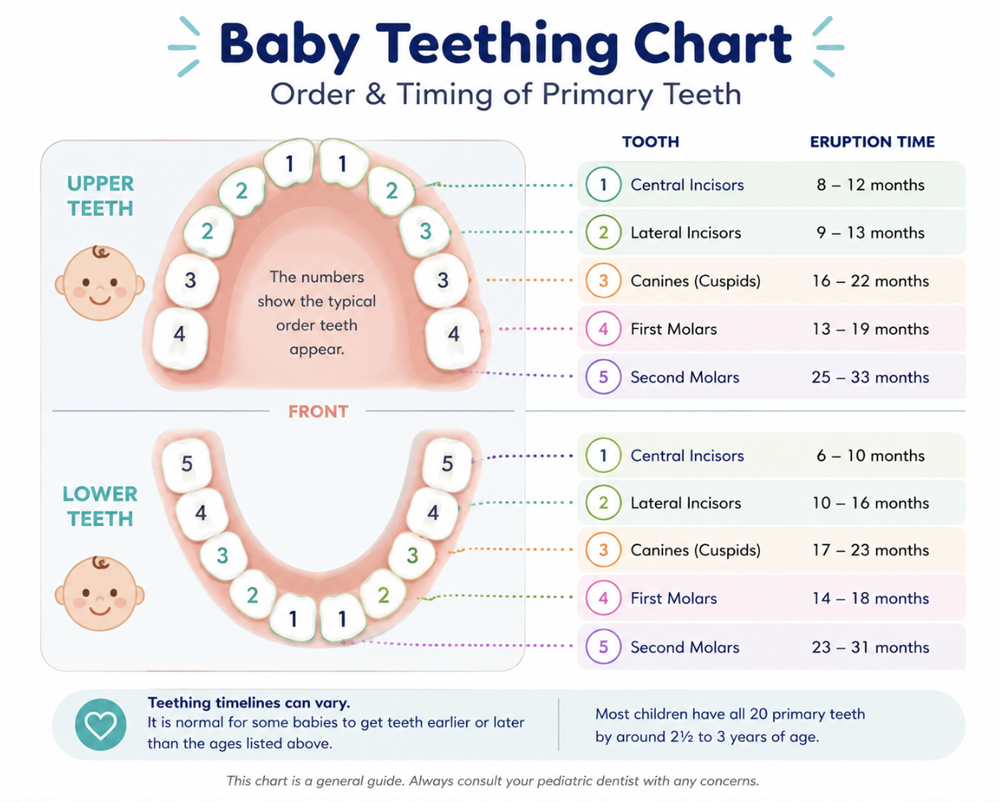
What Is the Typical Baby Teething Order?
Children eventually develop 20 primary teeth. Although the timing and sequence can vary, baby teeth generally erupt in a predictable pattern.
The usual order includes:
- Lower central incisors: Bottom front teeth
- Upper central incisors: Upper front teeth
- Lateral incisors: Teeth beside the front teeth
- First molars: Back chewing teeth
- Canines: Pointed teeth beside the lateral incisors
- Second molars: Final back teeth to emerge
Most children have all 20 primary teeth by around age three. A child’s eruption schedule does not have to match this sequence exactly to be considered normal.
How Can You Help a Teething Baby?
Simple measures are usually enough to help babies experiencing mild discomfort.
You can try:
- Gently massaging the gums with a clean finger
- Offering a firm rubber teething ring
- Providing a clean, cool washcloth for your baby to chew
- Chilling teething toys according to the manufacturer’s instructions
- Wiping excess drool from the face to reduce skin irritation
Products containing benzocaine should not be used for teething pain in infants and young children. Teething necklaces and other teething jewelry should also be avoided because they can present choking or strangulation hazards.
If a baby appears particularly uncomfortable, a pediatrician or pediatric dentist can provide guidance on whether an age-appropriate pain reliever is recommended.
Symptoms Not Associated With Teething
It is easy to attribute changes in a baby’s behavior to an emerging tooth, especially during the first few years of life. However, not every symptom that occurs during this period is caused by teething.
Symptoms that may indicate illness or another cause include:
- Fever
- Significant diarrhea
- Vomiting
- Severe or persistent coughing
- Unusual lethargy
- Symptoms that are severe or continue to worsen
Contact your child’s pediatrician if your baby has a fever or other symptoms of illness.
Early Dental Care for Growing Smiles
At Sunny Smiles Pediatric Dentistry, Dr. Marai Vales provides family-friendly care focused on education and each child’s individual needs, including children with autism and other special needs.
To book an appointment at our pediatric dental office in St. Petersburg, call (727) 914-6611 or visit us at 8525 Dr M.L.K. Jr St N, St. Petersburg, FL 33702.
FAQs
Can a baby start teething at 3 months?
A baby can show signs associated with teething at three months, although the first tooth more commonly appears around six months. Tooth eruption timing varies from child to child.
Can babies have teething symptoms before a tooth appears?
Yes. Gum tenderness, increased drooling, chewing, and fussiness may occur before the edge of a tooth becomes visible.
When should I take my baby to the dentist for the first time?
The first dental visit is recommended when the first tooth appears or by the child’s first birthday, whichever comes first.