Early, consistent dental care helps set the foundation for a lifetime of healthy smiles. From the first baby tooth to the arrival of permanent teeth, our goal is to make dental care simple, educational, and positive for your entire family.
Why Baby Teeth Matter
Primary teeth help your child chew, speak clearly, and maintain proper spacing in the jaw for permanent teeth. If a baby tooth is lost too early due to decay or trauma, it can lead to issues with alignment, crowding, or bite development.
We help protect baby teeth through preventive care, early intervention, and education that empowers parents to support healthy habits at home.
When to Start Dental Visits
Children should have their first dental visit by their first birthday or within six months of their first tooth coming in. These early visits help us catch problems before they start and allow your child to get comfortable in the dental chair. After the first visit, children should come in every six months for routine exams and cleanings.
Preventive Pediatric Services
Our office provides a full range of preventive services designed specifically for children, including:
- Dental exams and cleanings to monitor development and remove plaque
- Digital X-rays for early detection of hidden problems
- Fluoride treatments to strengthen enamel and protect against decay
- Dental sealants to shield cavity-prone back teeth from bacteria and food particles
Preventive visits are quick, comfortable, and tailored to your child’s needs and age.
Common Dental Treatments for Kids
Even with good brushing and healthy snacks, children can still develop dental issues. When treatment is needed, we offer:
- Tooth-colored fillings for small cavities
- Crowns to protect or restore damaged teeth
- Silver diamine fluoride as a non-invasive option to stop early decay
- Space maintainers when a baby tooth is lost too soon
- Pulpotomies (baby root canals) to treat infected nerves in primary teeth
- Gentle extractions, when necessary (excluding wisdom teeth)
- Sedation options, including nitrous oxide and IV sedation, to support anxious children or those with special healthcare needs
We take time to explain each step, offer choices when appropriate, and ensure that both parent and child feel comfortable and informed.
Learn more about our Pediatric Dental Services.
Daily Dental Habits
Protecting your child’s teeth starts with a few easy steps at home:
- Brush twice a day with a small, pea-sized amount of fluoride toothpaste.
- Help your child brush until they are at least 7 or can do it well on their own.
- Begin flossing once any two teeth touch.
- Offer water between meals instead of juice or soda.
- Choose snacks like cheese, apple slices, or whole grain crackers.
- Avoid sticky candies, fruit snacks, and constant grazing.
Following these simple steps each day helps keep your child’s teeth strong and reduces the risk of cavities. If you are unsure where to start or how to adjust habits as your child grows, we are here to help.
Brushing Instructions
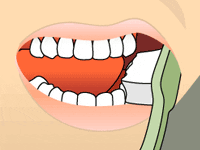
Brushing: Step 1
Place your toothbrush at a 45-degree angle to your gum.
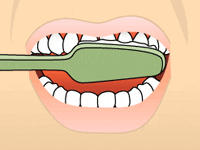
Brushing: Step 2
Brush gently in a circular motion.
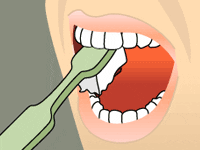
Brushing: Step 3
Brush the outer, inner, and chewing surfaces of each tooth.
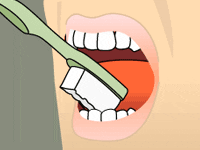
Brushing: Step 4
Use the tip of your brush for the inner surface of your front teeth.
Flossing Instructions
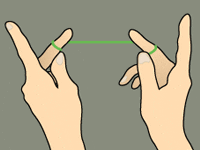
Flossing: Step 1
Wind about 18 inches of floss around your fingers as shown. Most of it should be wrapped around one finger, and the other finger takes it up as the floss is used.
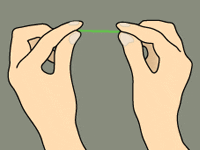
Flossing: Step 2
Use your thumbs and forefingers to guide about one inch of floss between your teeth.
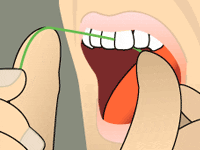
Flossing: Step 3
Holding the floss tightly, gently saw it between your teeth. Then curve the floss into a C-shape against one tooth and gently slide it beneath your gums.
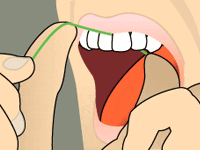
Flossing: Step 4
Slide the floss up and down, repeating for each tooth.
Download our Dynamite Dental Fun Kit to make brushing more fun at home.
Your Local Home for Children’s Smiles
You can find us in our bright yellow building with blue shutters, right off MLK Jr. Street near Gandy Boulevard. Our cheerful office, painted bright yellow with blue shutters, is a welcoming home for pediatric dentistry in St. Petersburg, FL.
We accept most PPO dental insurance plans and are in-network with many providers, helping families in St. Petersburg, FL receive high-quality pediatric care with predictable costs.
Schedule a Visit in St. Petersburg, FL
We make dental care simple, supportive, and smile-worthy from your child’s very first visit through every stage of their growing smile.
To book an appointment, at our pediatric dental office in St. Petersburg, FL, call (727) 914-6611 or visit us at 8525 Dr MLK Jr St N St Petersburg, FL.
Frequently Asked Questions
When should my child first see a dentist?
The American Academy of Pediatric Dentistry recommends a first visit by age one or within six months of the first tooth erupting.
What is the difference between a pediatric dentist and a general dentist?
Pediatric dentists complete dental school followed by several years of specialized training in caring for infants, children, and teens. This includes training in child development, behavior guidance, and treatment for children with special health needs. They focus on making dental care comfortable and positive for kids, using language, tools, and techniques designed specifically for young patients.
How can I prepare my child for their first dental visit?
Keep a positive attitude, as children often pick up on how their parents are feeling. Avoid negative words like “pain” or “shot,” and instead explain that the dentist helps keep their teeth healthy. Show your child pictures of the office or read a book together about visiting the dentist.
Why are baby teeth important if they eventually fall out?
Baby teeth help children speak, chew, and smile. They also hold space for permanent teeth. Losing them too early can lead to alignment problems and may affect overall health if decay or infection is left untreated.
What’s the best way to clean my baby’s teeth?
Before teeth come in, gently wipe your baby’s gums with a soft, damp cloth after feedings. Once the first tooth appears, use a soft-bristled toothbrush made for infants. Brush twice a day with a smear of fluoride toothpaste, about the size of a grain of rice. Start to floss once they have two teeth that touch.
What causes cavities in children?
Certain types of bacteria live in our mouths. When they come into contact with sugary foods left behind on our teeth after eating, acids are produced. These acids attack the enamel on the exterior of the teeth, and eventually eat through the enamel to create holes in the teeth, which we call cavities.
How can I help my child avoid cavities?
Make sure your child brushes at least twice a day with fluoride toothpaste for two minutes. Begin flossing once they have two teeth that touch. Offer water instead of sugary drinks, limit snacking, and choose nutritious foods. Ask about fluoride treatments or supplements to strengthen enamel, and bring your child in for regular exams and professional cleanings. These simple steps can go a long way in preventing tooth decay.
Are dental sealants necessary?
Sealants offer extra protection for molars, which are especially prone to cavities. They are quick to apply and can last for years.
Should my child wear a mouthguard?
Even children’s sports involve contact, so we recommend mouthguards for kids who play sports like baseball, soccer, or basketball. A well-fitted mouthguard helps protect the teeth, lips, cheeks, and gums from injury. Ask us about having a custom-fitted mouthguard made for your child’s specific needs.
Is thumb-sucking harmful?
Thumb-sucking is normal for infants and young children, but if it continues past age 4, it can affect the way the permanent teeth grow in. If your child is having trouble stopping, we can offer supportive strategies to help break the habit gently and effectively.
Are dental X-rays safe for children?
Digital X-rays are safe for children and use very low levels of radiation. We take them only when needed to monitor development or check for hidden issues. Most children receive their first dental X-rays around age 4 to 6, depending on their risk of cavities and how their teeth are coming in.