Reviewed by Dr. Marai Vales
|
Reading time: four minutes
You may not think much about how your child swallows, but small patterns in early development can carry forward as they grow. Tongue positioning during everyday activities like eating and resting plays a role in how oral function develops.
Table of Contents
What Is the Tongue Thrust Reflex?
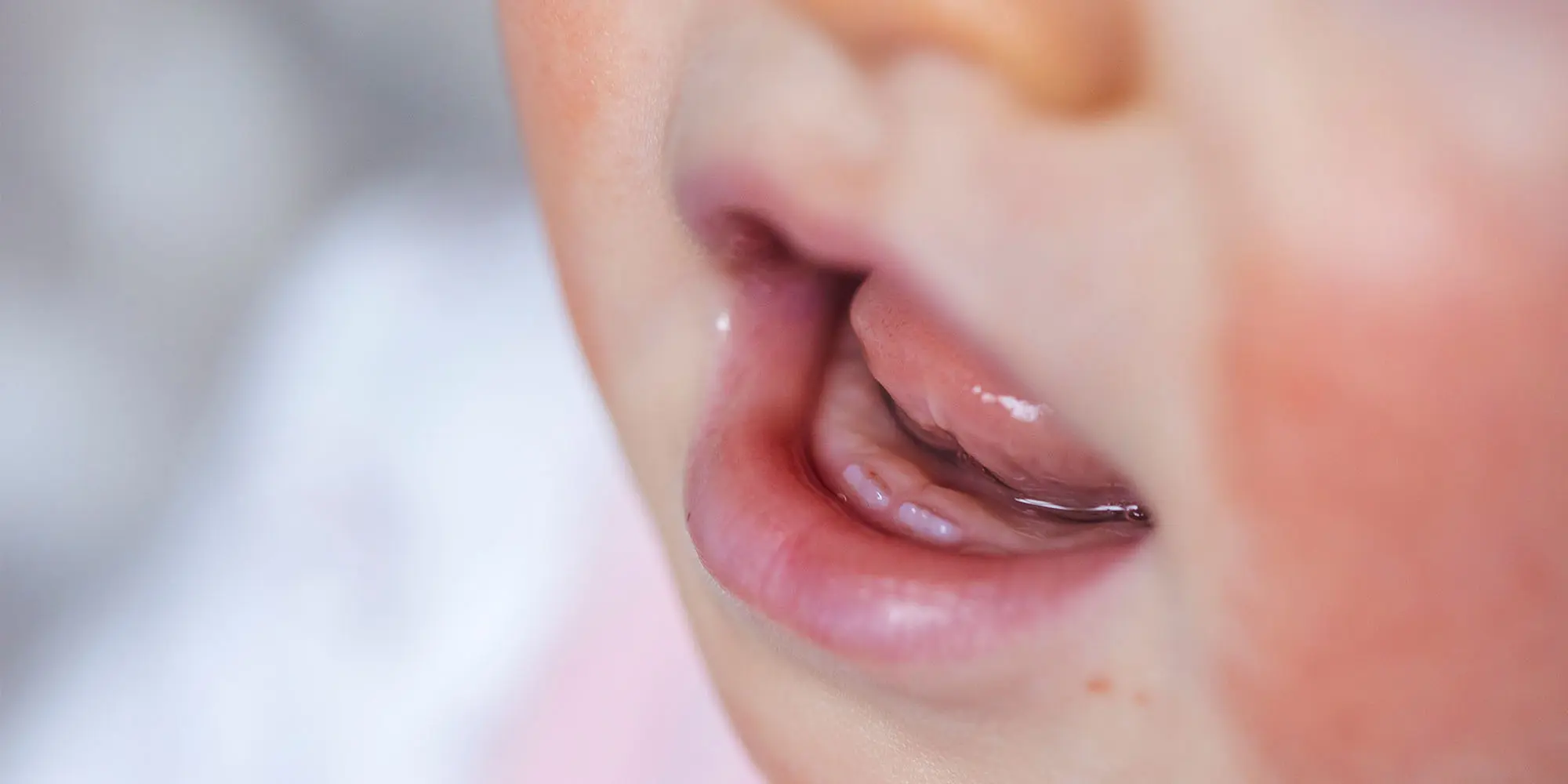
The tongue thrust reflex is a normal infant reflex where the tongue moves forward during feeding. This forward motion helps with nursing and swallowing and is expected during early development.
As feeding progresses from liquids to solid foods, the swallowing pattern typically changes. If the tongue continues to be pushed forward or the tongue protrudes between the incisors, this may begin to affect tooth position and bite alignment.
Causes of Prolonged Tongue Thrusting
Several factors can contribute to a persistent tongue thrust pattern. In many cases, more than one factor is involved.
Prolonged Oral Habits
Extended thumb sucking or pacifier use can place repeated pressure on the maxillary incisors and reinforce a forward tongue position during swallowing, delaying the transition to a more mature oral pattern.
Mouth Breathing
Children who breathe through their mouths rather than their noses often keep their lips apart and the tongue positioned low in the mouth. This resting position can make forward tongue movement during swallowing more likely.
Airway-Related Factors
Enlarged tonsils or adenoids can partially block the airway, making nasal breathing more difficult. As a result, the tongue may shift downward and forward to help maintain airflow, affecting resting position and function.
Delayed Oral Motor Skills
Some children take longer to develop coordinated oral motor skills, which are needed for proper tongue elevation and controlled swallowing without forward pressure against the teeth.
Learned Patterns
If the tongue consistently moves forward during swallowing, the muscles involved can reinforce that pattern, making it the default movement rather than transitioning to a typical swallow.
How Tongue Thrusting Affects Teeth and Bite Development
Repeatedly pressing the tongue against the teeth can contribute to the development of dental problems related to alignment and bite formation.
Common changes include:
- Forward movement of the maxillary incisors
- Spacing between the upper and lower front teeth
- An open bite, where the front teeth do not touch when biting
- Narrowing of the maxillary arch
- Changes in how the upper and lower teeth come together
The amount of impact depends on how often the tongue pushes forward and how much pressure is applied.
How to Stop Tongue Thrusting
Addressing tongue thrusting focuses on correcting the underlying pattern rather than forcing the tongue into position.
Helpful approaches include:
- Reducing contributing habits: Limiting thumb sucking or pacifier use can reduce forward pressure on the teeth.
- Encouraging proper tongue position: The tongue should rest against the roof when in a resting position.
- Identifying airway concerns: If mouth breathing or airway obstruction is present, evaluation may be recommended.
- Therapy to improve tongue function: Myofunctional or speech therapy helps improve tongue posture, swallowing patterns, and oral muscle coordination.
- Consistency across caregivers: Gentle reminders and consistent routines can help reinforce new patterns.
These steps are most effective when applied early, before permanent teeth begin to shift significantly.
When Should Tongue Thrusting Be Evaluated?
A pediatric dental exam is recommended if tongue thrusting continues beyond age four to five or begins to affect how the maxillary and mandibular incisors come together or alter bite alignment.
Signs to look for include:
- The tongue pushing between the front teeth during swallowing
- Front teeth that do not meet when biting
- Speech changes involving sounds like “s” or “th”
- Ongoing mouth breathing
- Visible changes in tooth alignment
Early evaluation helps determine whether the pattern is still developmental or beginning to affect the bite.
Monitoring Oral Development at Sunny Smiles
At Sunny Smiles Pediatric Dentistry, Dr. Marai Vales monitors how oral habits and tongue function influence dental development as children grow.
Evaluations include observing tongue position at rest and during swallowing, assessing how the maxillary and mandibular incisors come together, and identifying contributing habits or airway-related factors. When needed, digital imaging may be used to better understand how development is progressing.
Pediatric Dentist in St. Petersburg, FL
We are always accepting new patients! To book an appointment at our pediatric dental office in St.Petersburg, call (727) 914-6611 or visit us at 8525 Dr MLK Jr St N St Petersburg, FL 33702.
FAQ
Does tongue thrusting only happen during swallowing?
No. In some children, the tongue may also rest forward between the teeth even when not swallowing.
How can I tell if my child’s tongue rests in the wrong position?
Signs may include the tongue sitting low in the mouth, visible between the teeth at rest, or a frequent open-mouth posture.
Can orthodontic treatment fix tongue thrusting?
Orthodontic treatment can correct tooth alignment, but the tongue pattern must also be addressed to reduce the risk of teeth shifting again.